
Discover Barangay Bel-Air
History of Bel-Air.
How a village laid out in 1957 and a business district built from 1975 became one barangay.
Bel-Air Village
Bel-Air Village was the third subdivision Ayala developed. Work began in 1957 and the village was built in four phases. It covers 78.7 hectares, of which 64.7 hectares are divided into 950 residential lots. Buildings along Jupiter Street may rise to 12 metres; houses inside the village, to 9 metres.


Community life
The Phase III park is where the community meets: Community Day, bingo socials, the Valentine's dance, the KST program, the Easter egg hunt and trick-or-treat. Masses are held at the covered court, including the Saturday anticipated Mass, Christmas Eve and New Year's Eve. Makati City Hall often holds seminars in the conference pavilion.

Open spaces and parks
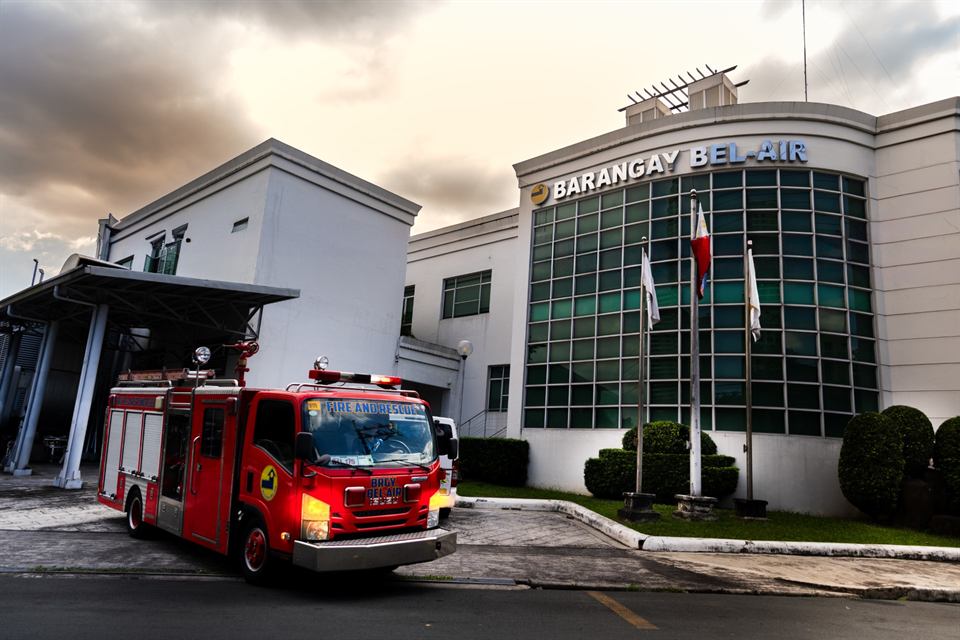
The village has two parks, one in Phase II and one in Phase III. The village association and the barangay offices are in the Phase III park.

Commercial streets
The main commercial streets are Jupiter Street, Makati Avenue, Nicanor Garcia Street and Estrella Street, with parts of Neptune (Buli), Orion and Polaris Streets. Most businesses along the edge of the village are restaurants.
Salcedo Village
Salcedo Village covers 45 hectares and is the largest of the four business-district areas inside the barangay. It was developed from 1975 and has 131 completed buildings with over 1.59 million square metres of floor space. The Makati Commercial Estate Association (MACEA) manages it. Jaime C. Velasquez Park is its green centre.


Population
Barangay Bel-Air has 36,007 residents (PSA, 2020 Census of Population and Housing).
Buildings
Salcedo Village and the avenues around it hold some of Makati's office towers, among them the 55-storey PBCom Building (232.56 metres).
Places of worship
- International Baptist Church
- The Jewish synagogue
- The Church of Jesus Christ of Latter-day Saints
- Asian Center for Christian Ministry